
Congo/ RGPH-5: Data That Reignites the Debate on Youth Employability
With a population of 6.14 million recorded in May 2023, the Congo now has new data to guide its public policies. But behind this population growth lie challenges such as youth unemployment, insufficient labor market integration, the prevalence of informal employment, and unequal access to essential services, particularly electricity. These concerns are highlighted in the eighteen thematic reports of the fifth General Population and Housing Census (RGPH-5), officially published on November 10 in Brazzaville.
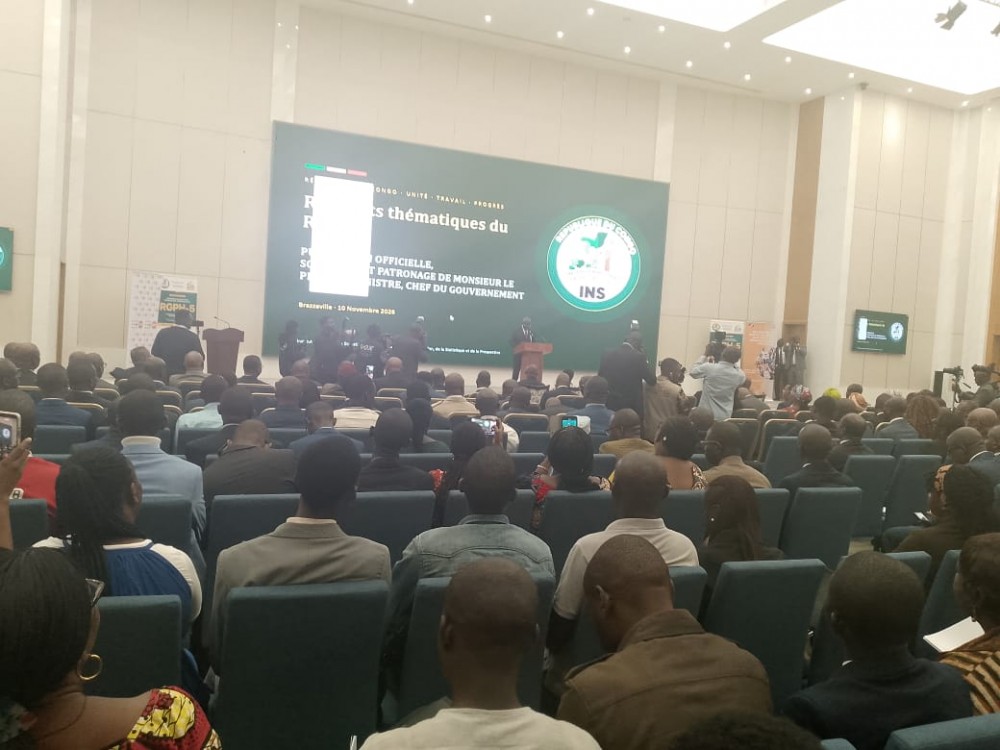
The demographic profile of the Congo reveals both opportunities and challenges for public authorities. Presented at a ceremony presided over by Prime Minister Anatole Collinet Makosso, the results of the RGPH-5 serve as a decision-making tool to better target investments and adapt development policies to the country’s social realities.
According to data from the National Institute of Statistics (INS), the unemployment rate among 15- to 34-year-olds reached 20 percent, compared to 14.4 percent for the total labor force. The situation is particularly concerning among 15- to 19-year-olds, where the rate peaks at 25.2%. Even more telling is that 77.3% of the unemployed have never held a job. According to INS Director General Stève Bertrand Mboko Ibara, these figures highlight the difficulties of transitioning from the education system to the workforce, as well as the need to strengthen vocational and technical training programs in line with the economy’s needs.
The integration of young people into the workforce is also hampered by the productive sector’s limited capacity to provide decent jobs. Nearly three out of four employed young people work in the informal private sector. This proportion reaches 91.3% in rural areas, compared to 65.7% in urban areas. This situation reflects both the dynamism of self-employment and the precarious nature of working conditions, which are often characterized by a lack of social protection and unstable incomes. The secondary sector’s limited contribution—accounting for only 3.6% of the workforce—also raises questions about economic diversification and the development of industrial and processing activities.
Access to energy is another critical issue for the development of human capital and the creation of economic activities. In his remarks, the Prime Minister particularly emphasized inequalities in access to electricity and drinking water. Beyond domestic comfort, the availability of these services is essential to the functioning of schools, training centers, health facilities, and small businesses. Improving energy access thus appears to be an indispensable lever for labor market integration and for revitalizing the economic fabric.
The reports also highlight the need to better take into account different social groups when designing public policies. Women, adolescents, children, the elderly, people living with disabilities, and vulnerable populations are all groups whose needs must be integrated into development programs. The situation of young women, whose unemployment rate stands at 21.7 percent—compared to 18.7 percent for young men—clearly illustrates the persistent inequalities in employment.
For the government, the challenge now is to translate these statistical data into concrete actions. In officially launching the dissemination of the reports, Anatole Collinet Makosso called on public administrations, local governments, and various development stakeholders to adopt them. This data should help update public policies, prepare budgets, and develop future national development plans.
Source: www.adiac-congo.com/