
Burkina Faso/Artificial Intelligence: A 30 billion CFA franc roadmap to create 5,000 specialized jobs by 2030
Burkina Faso intends to accelerate its development in the field of artificial intelligence (AI) through a national roadmap covering the period 2026–2030. With a projected budget of 30 billion CFA francs, this document calls for, among other things, the creation of 5,000 specialized jobs and the training of 500 experts and 140 community leaders. In addition, the plan calls for the development of 23 experimental AI solutions across several priority sectors. These goals were presented by Dr. Yaya Traoré, Permanent Secretary for Innovation and Monitoring of Emerging Digital Technologies. This took place during a conference held on Friday, October 23, 2026, as part of the second edition of Le Faso Digital, an initiative of Lefaso.net.
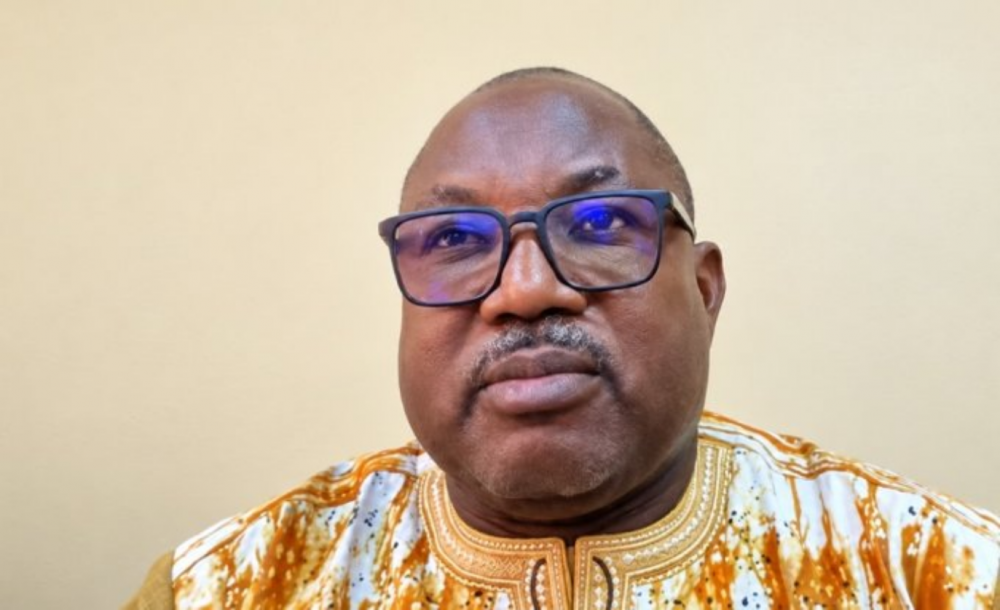
The Burkinabé government aims to make artificial intelligence a driver of economic and social transformation, while strengthening the country’s digital sovereignty. This is the goal set forth in its 2026–2030 national roadmap, presented during a virtual conference titled “The Burkinabé Government’s AI Roadmap.” The discussions were moderated by Amon Mocé Rodolphe Bazongo, a technology entrepreneur, artificial intelligence consultant, CEO of Brain Machine, and director of Tech Emerging Africa.
The document, which took ten months of work and consultation to develop, was approved on June 19, 2026. However, according to Dr. Yaya Traoré, its official publication is still pending. It is part of the 12 initiatives for the digital transition by 2030, specifically the 11th initiative dedicated to artificial intelligence serving all Burkinabè.
The roadmap also aligns with the priorities of the RELANCE plan and the National Strategy for the Development of the Digital Economy (SNADEN), which is currently under review. It aims to structure public and private initiatives around a sovereign, inclusive, responsible, and competitive artificial intelligence ecosystem.
Building a National AI Ecosystem
To achieve this goal, the government plans to allocate 30 billion CFA francs over five years. This projected budget will be distributed across five areas of focus. The largest portion of the budget, estimated at 10.5 billion CFA francs—or 35%—will be allocated to the development and testing of artificial intelligence solutions. Sovereign infrastructure and data preparation will each receive 6 billion CFA francs (20%). Training and skills development will account for 4.5 billion CFA francs (15%), while 3 billion CFA francs (10%) will be set aside for governance and coordination.
Dr. Yaya Traoré acknowledges that this budget may seem modest given the stated ambitions. He believes, however, that it provides a foundation for gradually implementing priority actions, taking national capacities into account. The roadmap also calls for training at least 500 artificial intelligence experts and 140 community leaders, with the goal of creating 5,000 specialized jobs by 2030.
23 AI Projects to Address Burkina Faso’s Challenges
One of the distinctive features of this roadmap is its operational approach. Rather than limiting itself to general guidelines, the document prioritizes concrete applications of artificial intelligence to address the problems identified in national development policies. In total, 23 proofs of concept—that is, experimental solutions designed to demonstrate the feasibility of a technological application—were selected during the document’s validation process.
These projects address four major challenges: security and social cohesion, public governance, human capital development, and infrastructure. In the area of security and social cohesion, tools could, in particular, help detect hateful content and videos manipulated using artificial intelligence, commonly known as “deepfakes.” Dr. Traoré cited the example of a fake video attributing hateful remarks to a traditional chief to illustrate the value of developing tools capable of quickly alerting the relevant authorities.
In the area of public governance, applications are being considered to detect irregularities in public procurement, particularly the risk of collusion among bidders. Other solutions could streamline certain administrative tasks and improve access to legal information. The health and education sectors are also among the priorities. In particular, the government is considering tools to assist with medical diagnosis, translation systems to facilitate consultations at health centers, and smart tutors designed to support learning.
Agriculture, drinking water, energy, and public works are also among the sectors likely to benefit from these innovations.
Mooré, Dioula, and Fulfulde at the Heart of the First Applications
Linguistic inclusion plays a key role in the roadmap. The government aims to develop artificial intelligence models capable of understanding and processing national languages, in order to make this technology accessible to as many people as possible. Three languages have been selected for the first phase: Mooré, Dioula, and Fulfulde. Other national languages could be gradually integrated.
To support this initiative, Dr. Traoré notes that agreements have been signed with Radiodiffusion Télévision du Burkina (RTB) to collect the linguistic data needed to develop these models. The goal is, in particular, to enable people to communicate with AI applications in their native languages. In health centers, for example, a translation tool could facilitate communication between a patient and a healthcare worker who do not speak the same language.
This approach aligns with the government’s commitment to developing artificial intelligence that is accessible to rural populations, non-French speakers, and citizens with limited digital resources.
Control over data and infrastructure is another major pillar of the roadmap. The government plans to develop national capabilities for data hosting and processing, notably through data centers, cloud infrastructure, and a Data Lake-type management architecture. This system is intended to centralize, prepare, and secure the information necessary for the operation of future applications.
According to Dr. Yaya Traoré, the goal is to achieve national hosting of at least 80% of the relevant data. He also notes that the data and models developed as part of the roadmap should remain under the control and ownership of the state. In this regard, the speaker highlights the efforts undertaken by the National Agency for the Promotion of Information and Communication Technologies (ANPTIC) and the National Agency for Information System Security (ANSSI) to strengthen infrastructure and cybersecurity. “The solutions we will develop as part of this roadmap will be hosted primarily at the national level,” he assured.
This commitment to sovereignty is accompanied by a particular focus on the protection of personal data, the confidentiality of information, and system security.
An Ethical Framework to Guide AI Solutions
The expert emphasizes that AI development must also adhere to seven guiding principles. He cites digital sovereignty, endogenous development, equity and inclusion, responsibility and accountability, transparency, data protection, and governance involving multiple stakeholder groups. These guidelines will be supported by an ethical framework called “Vertus,” designed to assess the compliance of artificial intelligence solutions with national values and requirements.
The framework places particular emphasis on fairness, transparency, security, citizen participation, and the usefulness of applications. It also calls for prioritizing, whenever possible, solutions that operate offline and on entry-level devices. Before their large-scale deployment, applications will have to undergo testing phases in controlled environments, known as regulatory sandboxes, to evaluate their performance and potential risks.
At the institutional level, an Artificial Intelligence Council is being considered to provide strategic guidance and facilitate interministerial decision-making. Whether it will report to the Office of the President of Burkina Faso or the Prime Minister’s Office has yet to be determined. The Ministry of Digital Transition, for its part, would handle operational coordination, with support from focal points within the various relevant agencies.
Dr. Yaya Traoré explains that the authorities have deliberately prioritized an operational document based on Burkina Faso’s priority issues and the solutions likely to address them. He also noted that the country already has the SNADEN, whose revision must take into account emerging technologies, particularly artificial intelligence and blockchain. The goal is therefore to avoid a proliferation of separate strategies and to prioritize a coherent national framework for digital development.
The speaker also invited researchers, technology companies, digital professionals, organizations, and citizens to contribute to the improvement and implementation of the roadmap. In this regard, he commended the participation of Burkinabè experts from the diaspora in its development.
A Phased Implementation Through 2030
The roadmap thus calls for a multi-phase rollout. The year 2026 is dedicated to the launch and preparatory work. The 2027–2028 period should accelerate the development of the first applications, particularly in the areas of national languages, health, agriculture, and education. The final phase will be dedicated to scaling up solutions that have met technical, ethical, and security requirements. A revision of the document is also planned for 2028 to account for technological advancements and new needs.
Dr. Traoré acknowledges, however, several risks that could hinder the implementation of this ambition. He cites, in particular, the insufficient quality of available data, connectivity challenges, and infrastructure failures in certain rural areas, as well as excessive dependence on technical and financial partners. Despite these challenges, he believes that political will and the mobilization of national expertise are key assets for the success of this transformation.
Through this roadmap, Burkina Faso aims to move beyond the mere use of artificial intelligence to the design of national solutions capable of meeting the needs of its people. The task now is to translate these stated ambitions into concrete achievements that are accessible to government agencies, businesses, and citizens alike—even those in the country’s most remote areas.
Source: lefaso.net/