
Quilombo Inteligente: A Year of Innovation with Youth from Vulnerable Communities
A Look Back at Quilombo Intelligente, a pilot project supported by AUF-Americas as part of the Educational Innovation in the Americas (InnovPed) program.
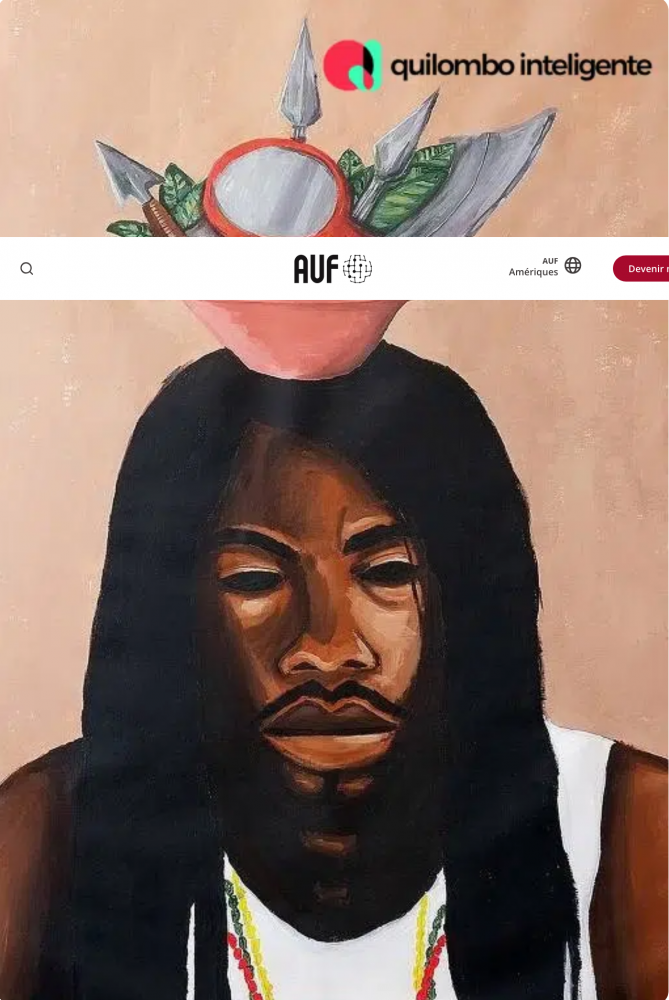
Selected as part of the “InnovPed – Educational Innovation in the Americas” call for proposals, launched by AUF-Americas in 2023, Quilombo Inteligente received 12,000 euros in funding over twelve months. The project aimed to test innovative, career-oriented educational approaches aligned with local realities and the UN’s Sustainable Development Goals.
Projects designed by young people, based on their own environments
The project draws inspiration from the historical term “quilombo,” which refers to communities founded primarily by enslaved Africans who fled their circumstances. Quilombo Inteligente takes up this reference in a contemporary and broader sense, to work with young people from regions marked by various forms of social and socio-environmental vulnerability.
The initial ambition was twofold: to combine technological innovations with innovations in practices to support these young people’s career development. This approach gave rise to a network called UAIFAI — Universos Abertos à Imaginação, à Fantasia e às Artes da Iconomia (Universes Open to Imagination, Fantasy, and the Arts of Iconomy) — conceived as a platform-habitat rather than a mere training program.
Interest in the initiative was evident from the moment it launched: approximately 130 applications were received, particularly from the states of São Paulo, Goiás, Bahia, Rio de Janeiro, and Espírito Santo. Participants were invited to draw on their own environments and the challenges facing their communities to devise projects at the intersection of digital technology, culture, and creativity. Over the course of the year, they developed documentaries, photography exhibitions, podcasts, video games, and board games.
Tangible Results on the Ground
Among the projects led by participants are documentaries on the history of the quilombos of Vargem Grande Muquém and Baco-Pari (Goiás), a project on the technological connections of daily life in Lagoa de Maria Clemência (Bahia), the Ayvu Katu podcast and the Afronautas video game produced in collaboration with Aldeia Jaraguá in São Paulo, as well as several productions from Quilombo da Fazenda in Ubatuba. The FAROL REC.omunidade project, which originated in the São Remo favela, has also been submitted to public bidding processes organized by the city and state of São Paulo.
Beyond direct support, the project has helped mobilize significant additional resources: five initiatives developed in partnership with the start-up REComunidade were also submitted to various municipal, regional, and parliamentary calls for proposals, with a total requested amount of approximately 2 million reais (about 550,000 Canadian dollars).
An initiative that extends beyond the initial project
At the end of the period supported by the AUF, Quilombo Inteligente continued its development within the University of São Paulo (USP), while forging new collaborations in Brazil and internationally.
The new University Extension Program (AEX), the doctoral program “Humanities, Rights, and Other Legitimacies”—which, starting in January 2026, will introduce a new course on racism and fundamentalism in the digital age—as well as the Unified Scholarship Program for undergraduate students.
Internationally, cooperation with the University of Buenos Aires has made it possible to launch a track dedicated to the creative economy in fashion and textiles, with a student exchange program scheduled for March 2026. A collaboration with New York University’s Game Center and Games for Change has also fostered a program track focused on games as educational tools, particularly addressing environmental issues in partnership with the National Center for Natural Disaster Monitoring (CEMADEN).
The partnership with the Favelas Museum, meanwhile, has been strengthened over two years of collaboration, leading to the launch of a graduate-level course and new funding opportunities for 2026.
Beyond the projects completed over the past twelve months, Quilombo Inteligente demonstrates how educational innovation can draw on local realities to foster expression, creativity, and professional development among young people. The partnerships developed in Brazil and internationally are now opening up new opportunities for training and cooperation.
For the AUF, this initiative serves as a concrete example of the innovative pedagogical approaches it seeks to promote in the Americas through the InnovPed program.
More information: sites.usp.br/quilombointeligenteand iea.usp.br/noticias/quilombo-inteligente
Source: www.auf.org/