
Togo/Agroecological Innovations: A 20-million-euro regional program launched in Lomé
In Togo, the Economic Community of West African States (ECOWAS) has just launched the Project to Promote Agroecological Innovations in West Africa (PIA-AO). This regional initiative, with a budget of 20 million euros—more than 13 billion CFA francs—was launched in Lomé on Friday, September 4. It aims to accelerate the adoption of agricultural practices adapted to the region’s climatic and environmental constraints.
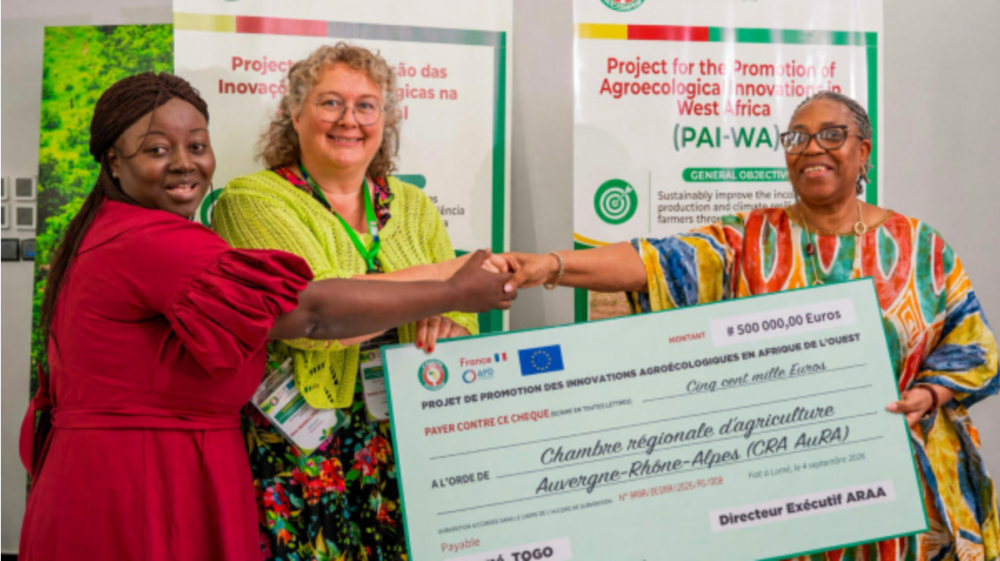
Funded equally by the French Development Agency (AFD) and the European Union through the DeSIRA+ mechanism, the project includes direct support for organizations working on the ground.
More than 12 million euros for on-the-ground actors
Of the total budget, approximately 12 million euros are earmarked to fund organizations involved in disseminating agricultural innovations. Twenty multi-stakeholder projects have already been selected, with signed agreements totaling more than 12.8 million euros.
The program aims to bring together farmers’ organizations, NGOs, researchers, and private-sector actors to develop solutions tailored to family farms and disseminate them on a regional scale.
“It is important to scale up agroecological innovations so that more farms can benefit from them and improve their production,” said Kanfitin Konlani, executive director of the ECOWAS Regional Agency for Agriculture and Food, at the launch.
Togo Involved in Three Projects
Togo is benefiting directly from this initiative through three local projects, in addition to capacity-building efforts for agricultural stakeholders.
For the country, this initiative is taking place in an agricultural sector that accounts for more than 40% of Togo’s GDP and employs nearly 65% of the working population. Climate variability is increasing the need for more resilient production systems. A study conducted since January in the Western Plateaus is already working to identify agroecological practices and the challenges faced by farmers.
Source: togofirst