
Belgium/Neanderthal man has certainly left DNA traces in the Scladina cave in Andenne
Given the fossils already discovered in the cave, including a 120,000-year-old jawbone, there is little doubt that Neanderthal DNA is present at Scladina. Researchers from Leipzig's Max Planck Institute, the world's leading institute in this field, are in Andenne this week to go over the cave with a fine-tooth comb.
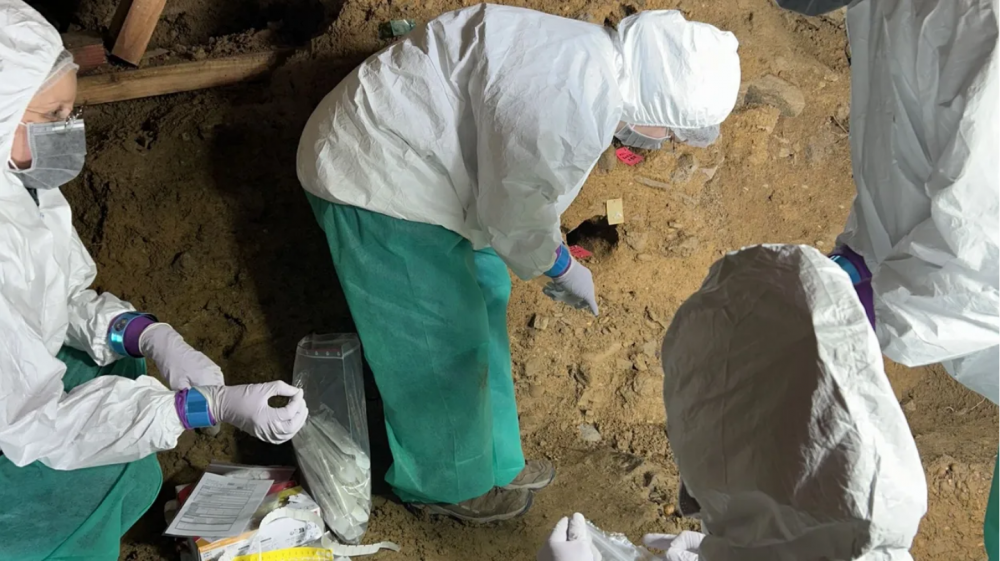
"It's a needle in a haystack but, but it's definitely worth it."
Aurore Galtier, a biologist at the Max Planck Institute in Leipzig, knows that her team may come home empty-handed from this very special dig at the Scladina cave. But the stakes are high. "In a cave in Spain, Atapuerca, we found human DNA dating back 300,000 years. Here in Andenne, we could go even further back in time."
Like a crime scene
Equipped with overalls, gloves and sterile masks, just like at a crime scene, the German researchers survey the cave, a small scraper in hand, and delicately drop a few grams of sediment into test tubes.
"In each sample, we're going to find millions of different strands of DNA from every living species: bacteria, plants, animals and, perhaps, human beings too. Our job will be to extract from this genetic soup sequences that may be human or from other mammals".
400,000 years of natural history locked away in a cave
What makes the Scladina cave so interesting for paleogeneticists (specialists in prehistoric DNA) is that it allows them to go back 400,000 years. The layers of sediment, and therefore the eras, are clearly identified. Following the indications of archaeologists, researchers at the Max Planck Institute took around 400 samples in all, covering all periods.
In forty years of excavation, the cave has yielded three Neanderthal fossils from three different individuals," explains Kevin Di Modica, archaeologist in charge of the excavations at Scladina: a tooth dating from around 45,000 years ago, another slightly older tooth, around 50,000 years old, and a 120,000-year-old jaw. But the older layers have not yet revealed any fossil traces such as bones or tools, and we hope to find DNA traces that would attest to the passage of Neanderthals through our regions at an earlier date."
The genetic excavation campaign lasted two days. However, the results of the laboratory analyses are not expected for several months or even years.
Source: www.rtbf.be