
Canada/New plan to house homeless families in Ottawa
The City of Ottawa has developed a strategy to deal with the persistent problem of homeless families, a situation that has led hundreds of them to sleep in motels for months on end over the past year.
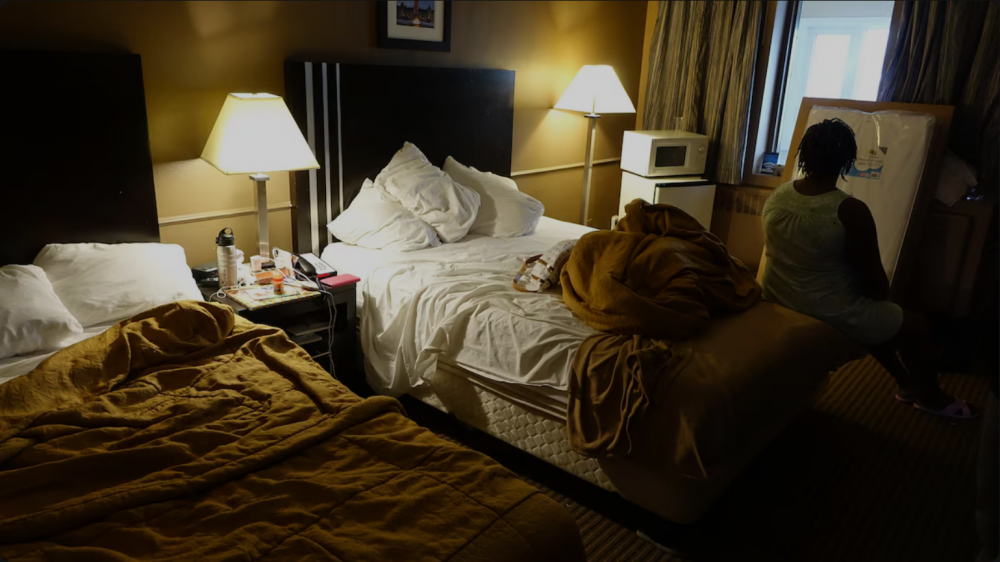
By March, 664 families - including more than 1,200 children - were being cared for by the system, according to the municipal administration.
This represents a 76% increase since 2023.
According to a document to be presented to the Community Services Commission next week, the average length of stay in these temporary accommodations is currently around 11 months.
This means that the City has spent nearly $30 million on hotel and motel accommodations in 2025 alone. For a family of four living in a single room, Ottawa spent an average of around $5,800 per month.
The plan will be less reactive
The goal is to implement this strategy within current budget constraints, without spending additional money to get it done.
Officials want to prioritize programs that provide emergency financial assistance and short-term bridge financing to help families pay rent and avoid eviction, the report says.
In 2025, more than 3,100 households, both singles and families, benefited from this type of assistance.
The city also wants to move families into permanent housing more quickly than before, says the report. It intends to move away from motels and expand its stock of permanent transitional housing.
New and redeveloped sites - including facilities on Corkstown Road and O'Connor Street - are expected to create more than 300 units, accompanied by on-site services such as daycare programs, health services and employment assistance.
The City of Ottawa is also looking to expand its housing supply. By 2025, 277 families had moved into permanent housing, most thanks to financial assistance.
But the report indicates that supply remains limited, and the city believes that more affordable housing is needed to meet demand.
Fewer families leaving homelessness
The report indicates that the number of households successfully exiting homelessness in 2025 fell by 41% compared to the previous year.
According to the 2024 Ottawa Point-in-Time Count - a type of survey used to estimate the number of people experiencing homelessness on a single night - the most common cause of family homelessness was low income. This was followed by the high cost of rent, lack of income assistance and a general lack of support.
In addition, over the past two years, the availability of housing assistance programs, such as the Canada-Ontario Housing Benefit, has been significantly reduced.
The report estimates that the waiting time for social housing in Ottawa is between five and eight years. It also highlights the lack of initiatives to transition to affordable housing.
While the city has spent some $40 million on nearly 1,000 affordable housing units by 2025, the report notes that most families experiencing homelessness are not on the waiting list.
Instead, they are on the social housing list, which is different.
Source: ici.radio-canada.ca/