Congo/ Development: In Kibina, water becomes a breath of fresh air
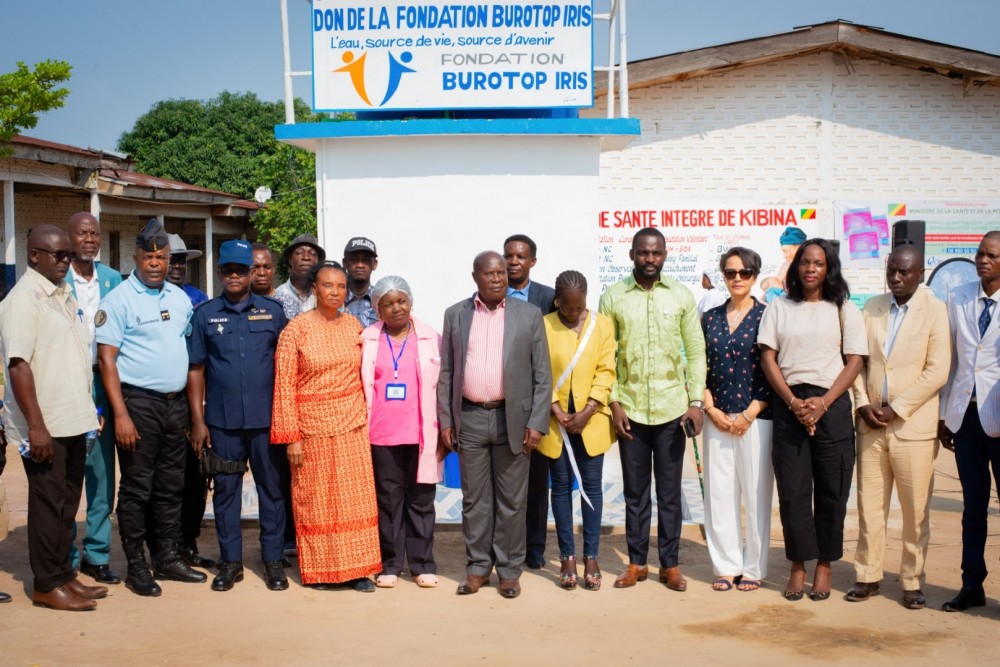
On November 25, the Congolese Burotop Iris Foundation inaugurated a modern borehole in Kibina, in the 8th arrondissement of Madibou, some 17 kilometers from downtown Brazzaville. This achievement is the result of years of thirst that no one had listened to.
For decades, the women of Kibina have known a geography of sacrifice. Unreliable wells, unpredictable springs, the perilous marigot: choices had to be made every day. And each choice came at a cost - in time, health and dignity. Madeleine Mbemba, mother of three, recounts with a smile that is finally liberated: "We had to walk at least two kilometers to find water. During the dry season, the springs dried up and we used whatever water we could find. The children often fell ill. Now we just turn on the tap, and it's all over. But above all, it's healthy water. "
She owes her silent revolution to the Burotop Iris Foundation, a Congolese organization that has been working in education, health and social protection in the country since 2008. The Kibina borehole is fully in line with this mission. Located at a depth of 57.5 metres, it is equipped with a 120-cubic-metre submersible pump and a 5,000-litre storage tank. An ingenious hybrid system ensures continuity. Solar energy first, then electricity for periods of insufficient sunlight.
"When we see mothers using this water, our mission makes sense".
Romaine Gangoyi, head of operations for the Burotop Iris Foundation, can't contain her emotion when she looks back on this project. At the inauguration ceremony, attended by Madibou mayor Alain Milandou and the district's administrative and military authorities, she explained the profound meaning of this commitment: "This borehole is fully in line with our social commitment: to take concrete action to improve the lives of our communities. The work was carried out on schedule, from August 9 to September 20, but what really touched us was to see mothers using this water during their consultations. It's in these everyday scenes that our mission takes on its full meaning. "
Prior to this achievement, the Kibina Integrated Health Centre had to regularly resort to water of dubious quality. Mrs Gangoyi points out that the borehole water has undergone rigorous physico-chemical and biological analysis by the Congolaise des Eaux central laboratory. The diagnosis is unambiguous: it is fit for human consumption.
The health center was breathing heavily
The Kibina integrated health center is the only medical facility in the district. With its fifteen staff and one director, midwife Marie Thérèse Kivouvou, it sees some six patients a day. A seemingly modest number, but a significant one for an area largely devoid of health infrastructure.
"This water is profoundly changing our work," confides Ms. Kivouvou, in a voice that is calm but full of conviction. "Before, we had to buy water or beg for it. It was expensive and unreliable. Today, we can really concentrate on our patients without that constant worry. Our pregnant women, our patients, all benefit from quality water for consultations, hygiene, post-partum care. "
But Ms. Kivouvou makes no secret of the fact. Other wounds remain open. The absence of an ambulance makes every obstetric emergency a nightmare. The road from Madibou to Kibina is dilapidated, sometimes forcing pregnant women to give birth at home. For the director of the CSI, however, this drilling represents tangible progress: "It's a first step. When you have nothing, you welcome what comes as a blessing. "
Beyond clean water
The inauguration, celebrated by Mayor Alain Milandou and the local authorities, remains the first stage of a rocket that must go higher. The Plateforme pour le développement de Madibou, which supported Burotop Iris in monitoring the project, has promised to continue its advocacy. But in Kibina, there are no illusions. A water borehole, no matter how efficient, is no solution to chronic poverty, the lack of ambulances or dilapidated roads.
Madeleine Mbemba sees things with a tender pragmatism: "This borehole means health for our children. Clean water prevents disease. And it's time saved, time that we can devote to school or work instead of running to fetch water. "She pauses, then adds with quiet certainty: "May the Burotop Iris Foundation be blessed. And may others like it come to help forgotten neighborhoods. "
On the metal sheets of district 810, a grey-tinted borehole now rises, modest but unshakeable. In Kibina, they already call it "the water of life". A simple nickname perhaps, but one that says it all: years spent waiting, hoping and finally welcoming.
Source: www.adiac-congo.com/