
Vietnam/ Education: Vietnam's strategic leverage by 2045
Many experts emphasize the need for fundamental and comprehensive educational reform. They see human development and knowledge as the pillars of sustainable growth for Vietnam by 2045.
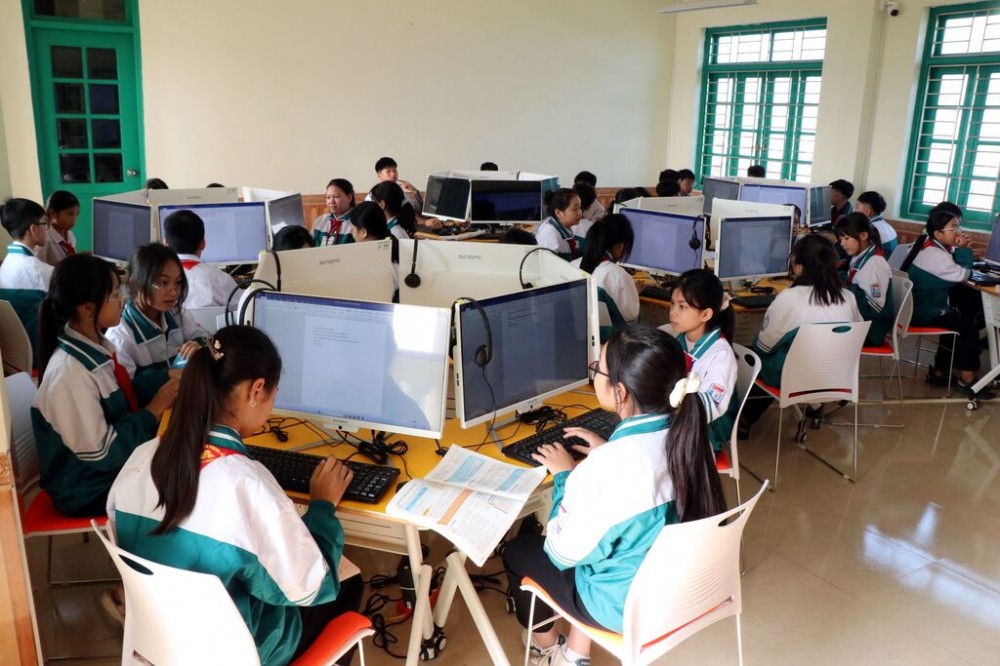
According toProf.-Dr. Nguyên Dinh Duc Nguyên Dinh Duc, Director of the Institute of Advanced Technology and Artificial Intelligence at Hung Vuong University, Ho Chi Minh City, Vietnamese education has made significant progress in recent years, actively contributing to the training of human resources and raising the intellectual level of the population.ducation in Vietnam has made significant progress in recent years, making an active contribution to training human resources and raising the intellectual level of the population.
However, marked disparities persist in terms of quality and learning conditions between regions, particularly between urban and rural, mountainous and remote areas.
If the principle of "education as an absolute national priority", in accordance with Politburo Resolution No. 71, is to become a tangible reality, the key challenge is to ensure that it becomes a reality.ality, the central challenge lies in guaranteeing equity of access and quality for every learner.
Analyzing the current challenges,Prof. Nguyên Dinh Duc identifies three major obstacles that need to be overcome as a matter of priority. The first is a persistent technological divide, with a lack of digital uniformity hampering the deployment of innovative pedagogical models. The second is a structural imbalance in human resources, which penalizes vulnerable areas with an acute shortage of qualified teachers. Finally, the system's overall effectiveness is limited by fragmented investment policies, with funding that remains scattered and insufficiently targeted.
To remedy this, he calls for breakthroughs in digital investment, in-service teacher training and the development of flexible educational models. At the same time, it stresses the need for sufficiently attractive incentive policies to encourage teachers to make a long-term commitment to disadvantaged regions.
Building a modern education
As far as international integration is concerned,Prof. Nguyên Dinh Duc believes that it is now an inescapable trend and a determining criterion for any modern education. Although Vietnam is not yet a leading destination for the world's scientific elite, this ambition implies transforming universities into regional academic hubs through four strategic levers.
Firstly, to promote effective internationalization of the academic environment, making English the working language of programs of excellence to facilitate scientific cooperation and co-publication. Secondly, a thorough reform of financial mechanisms must enable the emergence of centers of excellence equipped with state-of-the-art facilities. Thirdly, greater autonomy in personnel management and international cooperation is essential to attract and retain talent through competitive salary conditions. Finally, the influence of the national academic brand must be strengthened by a more assertive presence in international university rankings. In this perspective, Vietnam no longer intends to undergo integration, but aims to shape it within the global knowledge chain.
Attracting and mobilizing talent
The strategic vision for 2030 aims to position Vietnam as a center of academic excellence in Asia. According to AssociateProfessor Trân Hoài An, "this dynamic relies in particular on attracting international talent in cutting-edge fields such as semiconductors, artificial intelligence and green energies". The aim is to mobilize around 100 leading experts in three key areas.
The first is an overhaul of the regulatory framework, with the simplification of residency procedures, the granting of long-term visas, and even access to citizenship. The second is based on increased financial attractiveness, including salary scales that depart from state standards and temporary tax exemptions. The third is to guarantee a stimulating professional environment, based on greater management autonomy - an essential condition for scientific creativity to flourish.
Prof.Dr. Duong Quy Sy, member of the National Council for Education and Human Resources Development, stresses that "education has become a condition of survival for the Vietnamese nation". In his view, it is imperative for the country to unleash its intellectual potential in order to compete through science, technology and innovation.
The draft political report presented to the XIVth Congress sets out a clear vision of "standardized, modernized, democratized and internationalized" education. This is not simply a continuation of previous policies, but a strategic shift in the face of increasingly intense global competition.
At the heart of this vision is the centrality of the human being. The school is conceived as the cradle of knowledge, while society constitutes the environment in which character, ethics and a sense of responsibility are forged. The document aims to awaken in the younger generation an aspiration for dedication and social responsibility.
"Education is not only a mission of development, it is intrinsically linked to the defense of the Fatherland", assertsPr.-Dr. Duong Quy Sy. Future citizens will have to combine solid knowledge, moral integrity and the ability to harmonize individual and national interests.
For the period 2026-2030, Vietnamese education is set to evolve towards an open knowledge ecosystem. Digital transformation and artificial intelligence are not ends in themselves, but levers designed to liberate human capacities and promote lifelong learning.
Only in this way can Vietnam integrate without dissolving, innovate without losing its identity. However, this strategic vision can only be achieved through constant political will, investment commensurate with the stated ambitions, and the commitment of society as a whole.
AsProfessor Nguyên Dinh Duc sums up, when "autonomy rhymes with responsibility" and "integration rhymes with identity", Vietnamese education will be able to fully assert its place on the international stage.
Source: lecourrier.vn/