
Vietnam: Technology Helps Shape a More Citizen-Centered Local Government
Nearly a year after the implementation of the two-tier local government model, the restructuring of the administrative system has brought about significant changes in public governance, fostering a transition from a traditional administrative model to a service- and development-oriented approach at the local level.
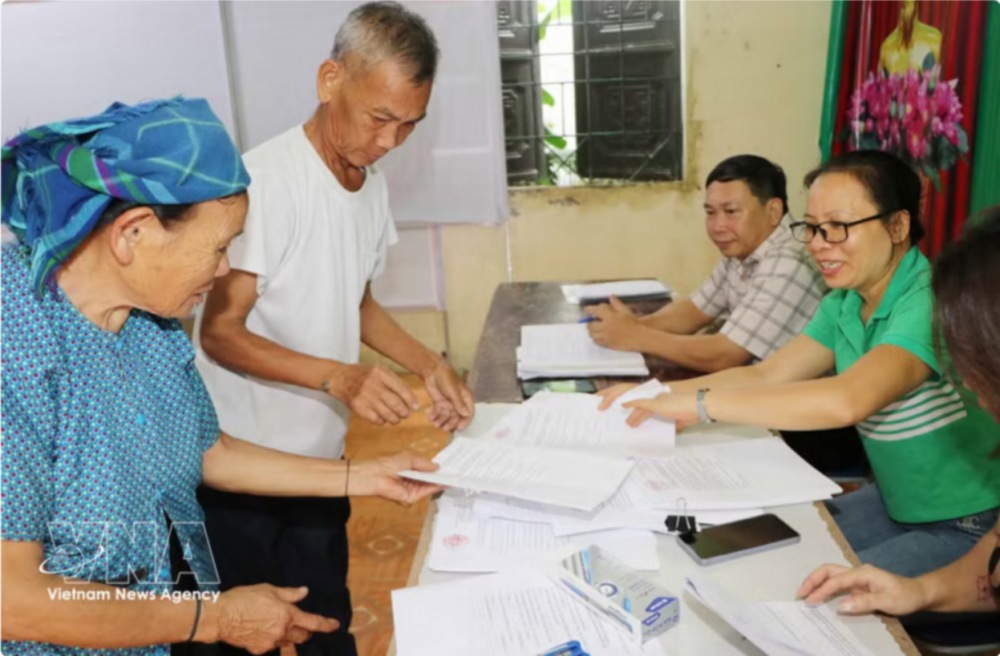
The elimination of intermediate administrative levels has simplified procedures and brought decision-making closer to citizens, while placing municipalities and neighborhoods at the heart of public service delivery. However, this new structure has also increased the pressure on local authorities.
In the commune of Phu Giao, in Ho Chi Minh City, local officials are now responsible for approximately 1,475 tasks, despite reduced staffing levels. In some merged localities, the number of administrative procedures has risen from about 150 to 370, significantly increasing the workload of front-line staff.
Nguyên Bich Thuân, an official at the People’s Committee office in Cu Chi Commune, stated that processing applications, updating databases, and publishing results electronically often extend well beyond regular working hours, reflecting the new realities facing local administrations.
Similar challenges have emerged in recently expanded localities. In Phan Dinh Phung District, Thai Nguyen Province, the population has exceeded 121,000 following administrative consolidation, while the local administrative service center has only seven staff members. In addition to staff shortages, local governments must also cope with a growing demand for specialized expertise in areas such as land management, finance, and information technology.
To address these challenges, many localities are prioritizing the adoption of technology and the overhaul of processes rather than simply increasing staff numbers.
The Phan Dinh Phung district has implemented an AI-powered virtual assistant that provides ongoing support to citizens seeking information and guidance on administrative procedures. Since mid-2025, this system has processed nearly 25,000 requests, 97.2% of which were completed on time or even ahead of schedule.
Elsewhere, local authorities have focused on improving their operational efficiency. In the Bên Cat ward of Ho Chi Minh City, young civil servants who are tech-savvy have been assigned to support new employees and distribute the workload among the various service counters. In Hanoi, in the Tây Hô and Ô Cho Dua districts, more than 91% of administrative files are processed online, and more than 14,000 documents have been signed electronically, significantly reducing manual procedures.
Bringing Public Services Closer to Citizens
This transformation is also evident in the way local governments interact with citizens. Rather than waiting for residents to visit administrative offices, many authorities are taking the initiative to bring services directly to communities.
Lê Van Hoa, vice chair of the People’s Committee of Minh Châu Commune in Hanoi, stated that the commune had implemented a “dual public service” model, under which civil servants process administrative paperwork in offices during the day and visit residents’ homes in the evening to assist them with their administrative tasks. This initiative has proven particularly beneficial for the elderly and those with limited digital skills.
Similar models have been adopted elsewhere. The Bên Cat neighborhood has set up mobile administrative service teams, while groups of young volunteers in Thai Nguyên help residents digitize their documents at home, thereby easing the pressure on one-stop service centers.
Greater decentralization and increased accountability have also enabled local authorities to resolve long-standing issues more effectively. In the commune of Quang Minh, in Hanoi, authorities have successfully reclaimed nearly 5,000m² of illegally occupied flood-prone land in the former commune of Dai Thinh. In the Ô Cho Dua neighborhood, the 591 households affected by the Ring Road No. 1 project agreed to relocate following transparent consultations with local authorities, thereby avoiding the need for coercive measures.
As the two-tier local government model transitions from its initial phase to full-scale operation, improvements in efficiency, responsiveness, and service quality are becoming increasingly evident. From one-stop service centers and mobile service teams to digital platforms and AI-powered assistants operating 24 hours a day, a new governance model is taking shape: one that is more proactive, more accessible, and better tailored to citizens’ needs in an ever-changing administrative landscape.
Source: lecourrier.vn/