Réunion is France's third youngest region
Insee presents the main socio-demographic characteristics of young people on Reunion Island. It shows that the island is the third youngest region in France, after Mayotte and French Guiana. But young Réunionese are struggling to become independent.
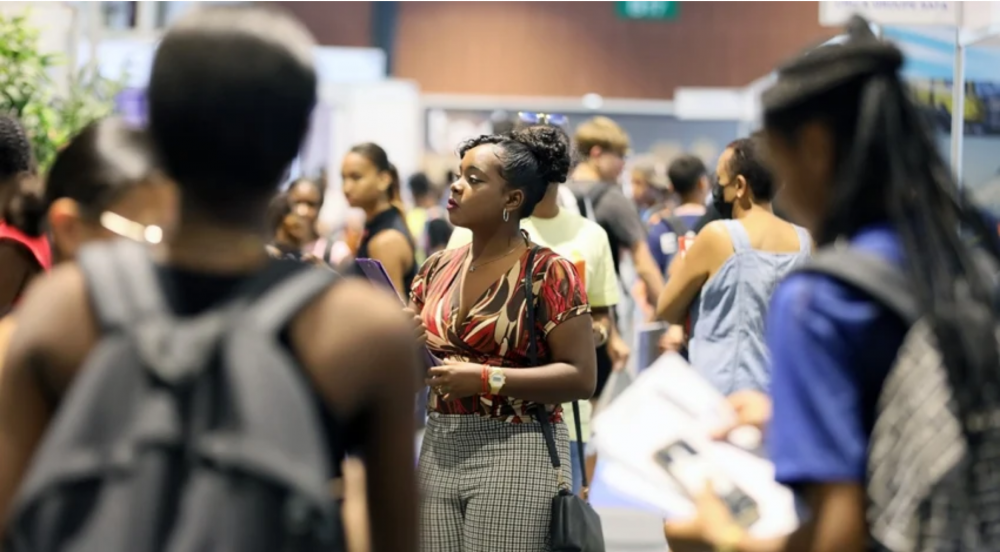
In 2020, 260,000 people on Reunion Island will be under the age of 20, i.e. 30% of the population. Young people outnumber senior citizens aged 60 or over by a factor of 1.7. In France, the under-20s make up a much smaller proportion of the population (24%), and are only slightly less numerous than those aged 60 or over (26%).Reunion's youthful population is linked to a high fertility rate, of around 2.5 children per woman since the early 1990s. The high incidence of early motherhood partly explains Réunion's high fertility rate. For example, 13% of the 1990-1999 generation of women born on the island became mothers before their twentieth birthday, twice as many as in France.Since the end of the 1950s, however, Reunion's population has been aging, mainly due to the spectacular increase in life expectancy. By 2050, the number of young people will continue to rise, but only slightly. At the same time, the number of people aged 60 or over will increase sharply. In fact, by 2050, there will be just as many young people under the age of 20 as there are people aged 60 or over.
Reunion's young people struggle to become independent
Reunion's young people are increasingly well educated. In particular, in 2019, 21% of young people under 30 will have completed their studies with a higher education diploma, compared to 17% in 2011. At the same time, school leavers without a diploma are reducing: 25% of young people who have completed their studies will not have a diploma in 2019, compared to 36% in 2011. However, this proportion is significantly lower in France (16%)
Despite the rise in the level of school-leaving qualifications on the island, in 2019 only four out of ten young people will have a diploma.le, in 2019, only four out of ten young people on Reunion Island are autonomous at the age of 29, i.e. working and living in their own home, compared with seven out of ten in France. Over the past decade, young people's access to independence has changed little on the island. Graduates from higher education are the most independent, combining studies, employment and housing. For the rest, on Reunion Island more than anywhere else, the path to independence is very different for men and women. Young men live longer with their parents, and move into their own accommodation once they're working, while young women first move into housing, and mostly become mothers before finding a job. However, even without children, women have less access to employment than men.To find out more:On Reunion Island, despite increasingly higher qualifications, young people are still taking a long time to become independent.
Difficult access to the job market for young people
On average for 2022, 49% of people aged 15 to 64 on Reunion Island will have a job as defined by the International Labor Organization (ILO), significantly less than in mainland France (68%).Only 29% of 15-29 year-olds in Réunion have a job, 20 points lower than in mainland France. However, the employment rate for young people in Reunion has risen by 3 points over the last three years, after falling by 2 points between 2014 and 2019.
The trend is identical for young men and women. Employment among young people is increasing, mainly thanks to the support provided for the hiring of apprentices as part of the recovery plan deployed during the health crisis. On average, 12,600 young people were in apprenticeships in 2022, after 9,500 in 2021 and 3,700 in 2019.
The youth unemployment rate will be 32% on Reunion Island in 2022, 2.5 times higher than in France.
In 2021, 41,000 young people aged 15 to 29 in La Réunion will be neither in employment, education nor training (NEET). They represent 26% of this age group, twice the national figure.Their share will nevertheless fall in 2021, thanks to the recent dynamism of youth employment linked to the growing use of apprenticeships, after five years of quasi-stability. The proportion of NEETs peaks between the ages of 24 and 29, with almost one young person in two in this situation. In 2021, young men are slightly more likely to be affected than women, whereas the opposite was the case in 2015. Three quarters of NEET young people want to work. Non-graduates are over-represented among NEETs: they account for four out of ten young NEETs.To find out more:In La Réunion, a quarter of young people will be neither in employment, education nor training in 2021.
Young people more affected by poverty
In 2020, the poverty rate in young households, where the reference person is under 30, was 51%, compared with 36% for the population as a whole.Poverty affects children even more. In 2019,110,500 minors were living in poor households, i.e. 46% of them (21% in France).
Source: www.clicanoo.re