SENEGAL-ECONOMY / Former migrants from Malem-Hodar benefit from return to the land
Former illegal emigrants have turned to farming, horticulture and poultry in Malem-Hodar, in the central Kaffrine region, with the help of the Institut sénégalais de recherches agricoles (ISRA) and the Agence nationale d'insertion et de développement agricole (ANIDA).
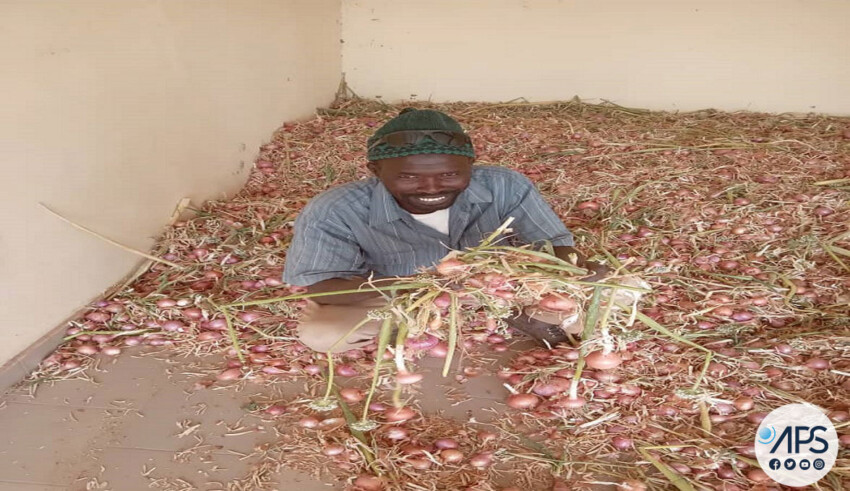
Twenty-five young people work on this ''Naatangué'' farm (the Wolof word for development) located in the south of the Malem-Hodar department. This type of agricultural estate has been popularized since 2018 as part of a project to combat illegal emigration.
The Malem-Hodar town council has granted land to its promoters to promote the "socio-economic reintegration" of former migrants and help them earn a living.
Six hectares of the farm are farmed using drip irrigation. A further four hectares are reserved for horticulture and arboriculture.
We've planted a lot of trees, including acacias, lemon, mango and cashew trees", explains Ibrahima Ndao, the farm's coordinator. In addition to the economic benefits derived from agricultural and horticultural activities, the initiative has the added advantage of greening the area, which is notoriously arid in the dry season.
The farm's operators ensure a diversity of crops. Corn, sorghum and other cereals are grown alongside eggplants, onions, tomatoes, cabbage, chillies and more.
Arboriculture is also developing. Moringa oleifera and lemon trees are present alongside other trees.
But in the dry season, onions are the most widely grown crop. It generates substantial income, says Ibrahima Ndao, adding that it is the favorite economic crop of former migrants now determined to make a living from farming.
The farm has completely transformed our lives".
A 20-kilo bag of onions sells for 7,000 CFA francs, or 350 CFA francs per kilo, says Mr. Ndao. According to him, each farmer can earn 800,000 CFA francs at the end of each crop year. We don't envy anyone, because the farm has completely transformed our lives," he insists.
According to Mr. Ndao, some of the former migrants have built houses and support their families with income from the "Naatangué" farm in Malem-Hodar, "without expecting anything from the State".
Young people need to get back to the land by exploiting local resources. It's possible," he maintains.
According to Ibrahima Ndao, ANIDA (Agence nationale d'insertion et de développement agricole) has set up a henhouse with some 2,000 birds on the "Naatangué" farm in Malem-Hodar, and has equipped it with several items of equipment.
This farm has created a lot of jobs, especially for would-be illegal emigrants, who have decided to return to Senegal and work there.négal and work there", he assures us, affirming that the women of Malem-Hodar no longer need to leave the commune to obtain their vegetable supplies.
It's a very profitable farm for the people of Malem-Hodar, who used to scour the markets in search of vegetables. Now, they buy the farm's crops and sell them elsewhere," says Mr. Ndao.
According to him, the "Naatangué" farm has made Malem-Hodar one of the main supply centers for agricultural and horticultural produce in the Kaffrine region. The chicken sold by the farmers is attracting more and more consumers and traders, he says.
Ibrahima Ndao says, "Women are coming to make a lot of orders to sell at 3,500 CFA francs a chicken in the region's markets. According to him, they now want to acquire a cold room, a car for transporting goods and a tractor.
Source: aps.sn/