
France/Normandy. Why do many names of towns end in "-ville"? We answer you
Deauville, Trouville or even Croissanville... Many Norman towns have the suffix "-ville" in their names. So much so that this characteristic raises questions. Why this particularity?
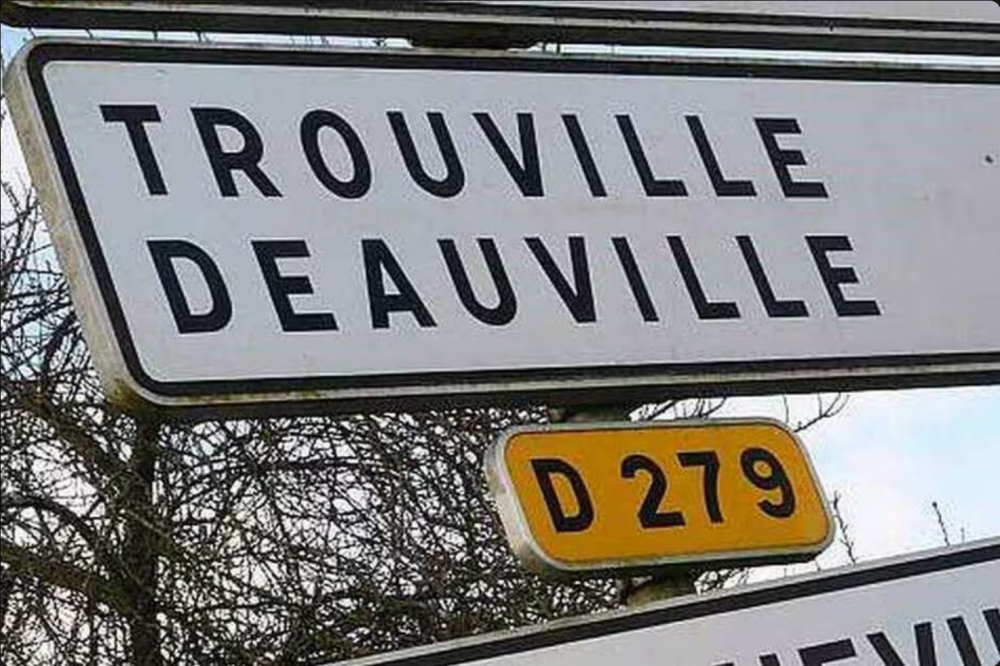
"Why do many names of communes in Normandy end in "-ville"?", asks Alix, herself a resident of a commune with an evocative name, as she writes to us from Canapville, in Calvados (14).
Normandy has 2,654 communes, according to the site open-collectivites.fr. Among them, about 600 have the word "ville" in their name, sometimes even twice when mergers have taken place, as in Biéville-Beuville (Calvados) or Anneville-Ambourville (Seine-Maritime).
But why such a presence of this characteristic? What are its historical roots? Ouest-France answers you.
What is the origin?
The word "city" comes from Latin. " It comes from the Latin villa, which means estate," explains Christophe Maneuvrier, a teacher and researcher in medieval history at the University of Caen. "The domain is a rather complex notion. There is a seigniorial part and a part where rural workers settled.
But this suffix usually completes " a prefix that can be of a topographical nature or, more often, derived from personal names. For example, the commune of Querqueville takes its name from the word kirkja, which means "church" in Scandinavian. Although it is not always easy to determine their precise origin, these personal names are "mostly of Germanic origin, sometimes Scandinavian".
An etymology that nevertheless allows historians and archaeologists to situate more precisely the periods during which these city names were established. " They are fixed during the High Middle Ages, between the seventh and probably until the tenth and eleventh centuries, " says our interlocutor.
If these names take root in this period, it is also because of changes in the way of life of the inhabitants. "We are in a region where, from the seventh to the eighth century, the village is structured around a church, a cemetery and habitats that are around. There is a rapprochement of the living and the dead. "A phenomenon that continues until the early eleventh century.
Source: www.ouest-france.fr/