Benin/Abdoul Malik SEÏBOU reviews the progress points of the 2020 audit
In October 2020, three members of EFOB conducted an audit mission in three Beninese municipalities: Cotonou, Djougou and Covè. Two years later, we went to collect for you, the progress made by the Mayor of Djougou since this audit for his constituents and for the influence of his city.
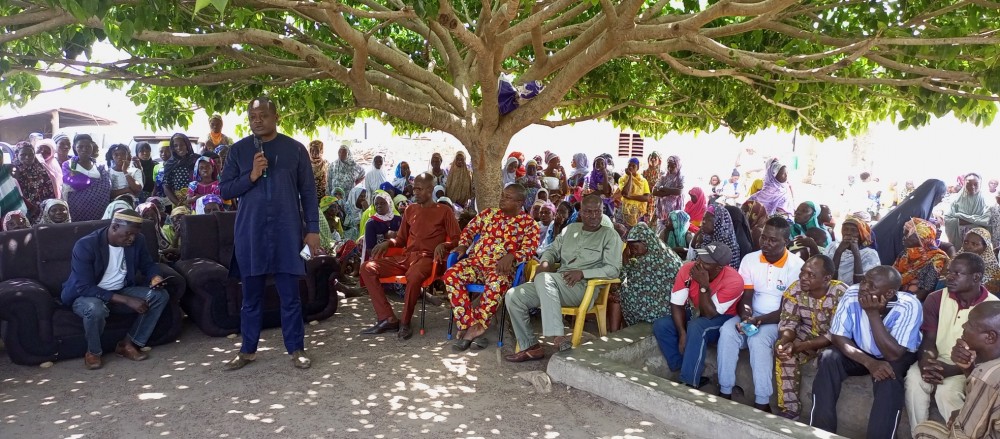
Mayor of the Commune of DJOUGOU, what are the assets of your city?
The Commune of Djougou is located in the northern part of northwestern Benin in the department of Donga.
Djougou, a cosmopolitan commune in northern Benin, is the third largest in terms of population and is a crossroads in the ECOWAS region. It covers 3,966 km2 with 12 districts and an estimated population of more than 327,184 inhabitants in 2020 (INSAE projection, RGPH4, 2013). The region was coveted by the Germans and the French, but it finally fell into the hands of France. It is located 461 km from Cotonou, the economic capital of Benin, 35 km from the Togo border, 550 km from Ouagadougou and 550 km from Ouagadougou, 667 km from Niamey, 950 km from Abuja, 600 km from Lagos, 1500 km from Bamako and 2390 km from Ndjamena.
Formerly located on the Colas road, Djougou is a real trading place. The human and natural potential of the Commune is enormous. Djougou stands at the crossroads of six major roads, which has earned it its reputation as "the crossroads town with six entrances. "
These potentialities are supported by its very integrated character in the national, sub-regional and international economy, thanks to These potentialities are supported by its very integrated character in the national, sub-regional and international economy, thanks to its markets which enable it to maintain various commercial relations with the communes of Benin, but also with neighboring countries (Togo, Nigeria, Burkina Faso, Ghana, Mali and Niger).
Djougou is the capital of the Commune and also the capital of the Department of Donga. The Commune of Djougou is fairly well watered (1,000 to 1,500 mm for 75 to 140 days of rain).
Its natural resources include sandy-clay or lateritic soils favorable to agriculture, lowlands, dams, water reservoirs, mining resources (sand, gravel, laterite) and diversified tourist resources.rite) and diversified tourist resources (palaces, sacred forests, classified forests, forest massifs, mysterious stones, ponds, hills, water tables, etc.).)
The economy of the Commune of Djougou is based on agriculture which employs 70% of the active population. The main products are: yams, sorghum, corn, millet, cowpeas, cassava, peanuts and cotton. Cashew nuts, cotton, and harvested products (shea nuts, néré) are the cash crops.
Trade in manufactured goods, agricultural products, and animals is the third largest activity after agriculture and livestock. Transport, an activity related to trade, is also important. These activities are growing because of the position of the capital of the Commune as a crossroads and transit city.
What are the development issues?
The major challenge facing the Commune is related to the constraints of promoting agricultural activities and developing the local economy.
The major challenges raised are persistent and concern
- The inorganization of certain promising speculations into sectors, the creation of added value chains, the supervision and availability of agricultural inputs accessible to all producers.
- The irrational and uncontrolled exploitation of natural resources without much concern for their preservation, sustainability and regeneration.
- The degradation with the silting up of watercourses which leads to the depletion of fishery resources, the disappearance of grazing, the climatic risks of desertification, climate change and their socio-economic impacts.
In addition to this central problem, there is the problem of mobilizing the Commune's own resources and the level of equipment of the Commune.
The Commune of Djougou is characterized by the low level of provision of basic social services as well as the poor condition of rural roads for the movement of goods and people.
Hygiene and sanitation issues are also major concerns of the Commune.
In 2020, you received an audit mission conducted by EFOB auditors. How was this audit useful for your Commune?
The organizational audit was very useful. It allowed us to identify the strengths and weaknesses, the points of attention and the areas for improvement of the Commune.
What have you implemented since then and with what results?
We have worked not only to strengthen the achievements but also to remedy the weaknesses, in particular through
- The computerized management of civil status records with the support of the National Agency for the Identification of Persons;
- The setting up of the Communal Center for Public Services for a dematerialized management of the acts of public agents;
- The revitalization of the system for the collection of own resources.
- The maintenance of the paved roads in the city of Djougou.
What other areas of work do you see with EFOB?
We think that the EFOB could help the Communes to revitalize decentralized cooperation through a better sharing of experiences in the perspective of international solidarity.
You are in a sensitive region, close to countries affected by the security crisis. How can a mayor prevent these risks in his Commune?
The local answer to this question is to improve the socio-economic living conditions of idle people in order to reduce their delinquency and to improve the quality of life.The local answer to this question is to improve the socio-economic living conditions of idle people in order to reduce their delinquency and consequently prevent unemployment and violent extremism which is caused by the low capacity of the youth.
It will also be necessary to sensitize the populations for the co-production of public security with the support of local security committees and the management of migratory flows.
Source: efob-association.fr