COTE D'IVOIRE: a new device treats medical waste at the Bondoukou Regional Hospital
In Côte d'Ivoire, the Bondoukou Hospital Centre (CHR) now treats its waste. On August 25, 2021, the health structure has benefited from a new equipment called banalizer. The device grinds and sterilizes by steam more than 60 kg of waste per day.
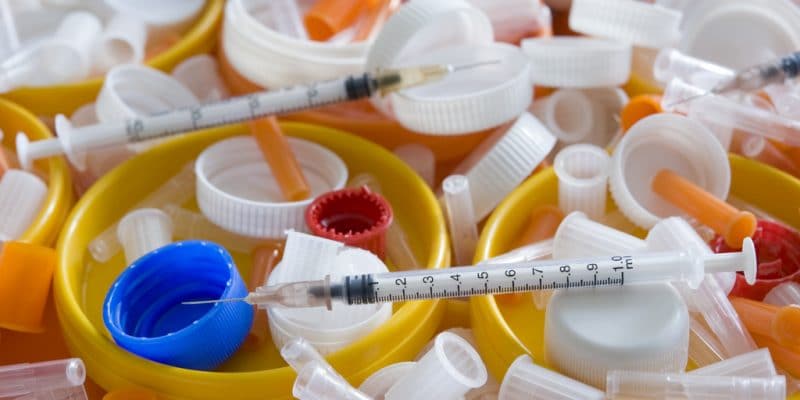
As Côte d'Ivoire continues its vaccination campaign against Covid 19, the government is finding alternatives for the treatment of medical waste produced by the country's health facilities. In this context, the Ivorian Ministry of Health, Public Hygiene and Universal Health Coverage recently inaugurated a banalizer at the Bondoukou Hospital Centre (CHR).
The device grinds and sterilizes by steam more than 60 kg of hospital waste per day. This includes needles, compresses, cotton wool, etc. The device installed in Bondoukou is similar to those put into service in the cities of Bouaké, Anyama and Treichville. The cost of the equipment is estimated at more than 600 million CFA francs (about '915,000).
Reducing waste contamination
The European Union (EU) is helping to finance the new equipment. In addition to the elimination of medical waste, the government wants to reduce the number of patients contaminated by the corona virus. According to the latest report of the Ivorian Ministry of Health, Public Hygiene and Universal Health Coverage, published on August 25, 2021, the country has 54,038 confirmed cases, including 52,834 people cured, 413 deaths and 791 active cases. For the time being, Côte d'Ivoire has received 1,293,296 doses of vaccine, between March1 and August 24, 2021.
If poorly managed, hospital waste, especially chemical waste, poses risks of air, water and soil pollution and exposes humans and other plants to adverse effects. "Eighty-five percent of this waste is comparable to household garbage and is not hazardous. The remaining 15% is considered hazardous and may be infectious, toxic or radioactive," the World Health Organization (WHO) said in a report report published in February 2018.
Source: www.afrik21.africa