Cameroon/Essential care in a continuing crisis : The northern regions of Cameroon benefit from the expertise of Médecins sans Frontières
The international and independent medical humanitarian organization has been based there for a little more than five years now, and specialists of all kinds are working daily to provide quality health care to various people. Médecins Sans Frontières (MSF) has been operating at the Maroua Regional Hospital for a few years now, providing various services. Humanitarian assistance to people affected by the insecurity in this region, which lacks health infrastructure and qualified personnel.
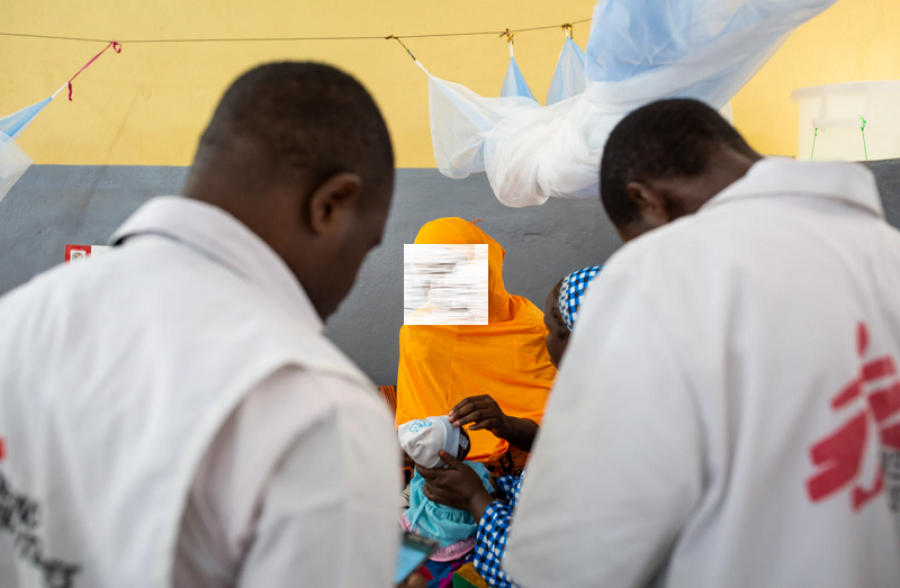
The services provided by MSF teams range from emergency trauma surgery for people affected by the conflict between armed groups and the military, to long-term surgical and rehabilitation care for people involved in car accidents and psychological care.
In addition to these, there is support for medical-obstetric-surgical assistance, psychosocial support for the victims of the conflict (direct or indirect) as well as for the indigenous population without any discrimination on the basis of sex, religion or political affiliation.
The teams also assist in the care of patients suffering from complicated fractures, serious soft tissue and abdominal infections, or burns, and provide free care for surgical emergencies 24 hours a day, 7 days a week, postoperative care, psychological consultations, and medical assistance.They provide free 24/7 emergency surgical care, post-operative care, psychological counseling and health promotion activities to help patients recover and resume their daily lives.
In total, more than 14,000 surgical interventions have been performed by the doctors working in this humanitarian organisation, who have also provided more than 8,000 mental health consultations in Maroua since 2016.
MSF teams have also responded to various disease outbreaks in the Far North region, including measles, cholera and COVID-19.
Physical and psychological impact
Hawa Haman - 16 years old: "It was a Wednesday, I was coming back from school with my friend, a car hit us, my friend died immediately and I lost consciousness. I was taken to the regional hospital in Maroua where my leg was amputated. When I woke up and saw that my leg was gone, I was in a lot of pain, I was crying, and I couldn't look at my foot. I spent more than seven months in hospital and then I received a prosthesis.
Hawa is not the only patient to have spent so much time in hospital. Some patients spend more than two years on continuous treatment. Whether it's a serious car accident, a burn or a gunshot wound, options for surgery and complex medical care, including psychological care, in the Far North are scarce, which makes the treatment provided in Maroua even more valuable.
Ibrahim Abdulahi - 24 years old, fled Nigeria to escape armed groups. He lost several brothers and his mother in an attack. He was referred to MSF, showing signs of post-traumatic stress.
"Attacks were happening every day," he recalls. "I'm constantly on edge, when someone closes a door, I think it's a weapon. I can't be with people, I can't sleep. I've lost a lot of brothers, my mother too, all in attacks. People avoided the gunfire until they went crazy...
It also disturbed me mentally because I couldn't sleep. I was sent here to MSF. When I arrived, I said I didn't know why I was living on earth now. But with the treatment I've been on since then, I'm better. Health-wise, I have recovered some sleep, I can sleep a little bit.
Security crisis and mental health
A subject that is very little discussed but whose impact is not to be neglected, reveals Raëlle Miamekongo, Maroua mental health supervisor, who adds:
"Last year alone, our medical teams provided 2,400 mental health consultations to patients in Maroua and Mora. Psychosocial support is offered to all patients and caregivers to help them during their treatment...
As soon as we arrived in Maroua, we had a plethora of types of cases. We have encountered both moderate and severe mental disorders.
Speaking of disorders, we can mention here cases of mood disorders, anxiety disorders, psychotic or psychiatric disorders without forgetting a large number of cases of substance use or abuse. In addition, there are many cases of attempted suicide.
Continuing needs and continuing care
After completing the rehabilitation of an intensive care unit and training new surgical teams, MSF took the option of transferring its services to the Ministry of Health.After completing the rehabilitation of an intensive care unit and training new surgical teams, MSF decided to hand over its services to the Ministry of Health, bearing in mind that the health needs in the region remain great.
In response, new projects are now being launched in the neighbouring areas of Mora and Kolofata.
In Kolofata, MSF teams will provide basic health care, including treatment for child malnutrition, malaria and diarrhoea.
In Mora, MSF will soon offer emergency surgery for complex deliveries and patients with trauma, including gunshot wounds.
These new services reflect the need not only for ongoing care, but also for more specialised services in a region that experiences frequent violence.
The addition of surgical management in Mora is particularly relevant, as this is increasingly the point from which many patients requiring emergency surgery are referred to Maroua.
Dr Modeste Tamakloe, MSF Head of Mission in Cameroon:"With the increased capacity of the general hospital in Maroua, and the addition of surgical services in Mora and primary care in Kolofata, our goal is to expand the availability of health care for the populations at a time when armed conflict, a changing climate, food and water insecurity imposes persistent difficulties on those in the Far North.
Source: agencecamerounpresse.com