
Vietnam moves towards a green economy
Vietnam is one of the countries most affected by natural disasters and rising sea levels. Developing a green economy will enable it to adapt to climate change while minimizing its impact.
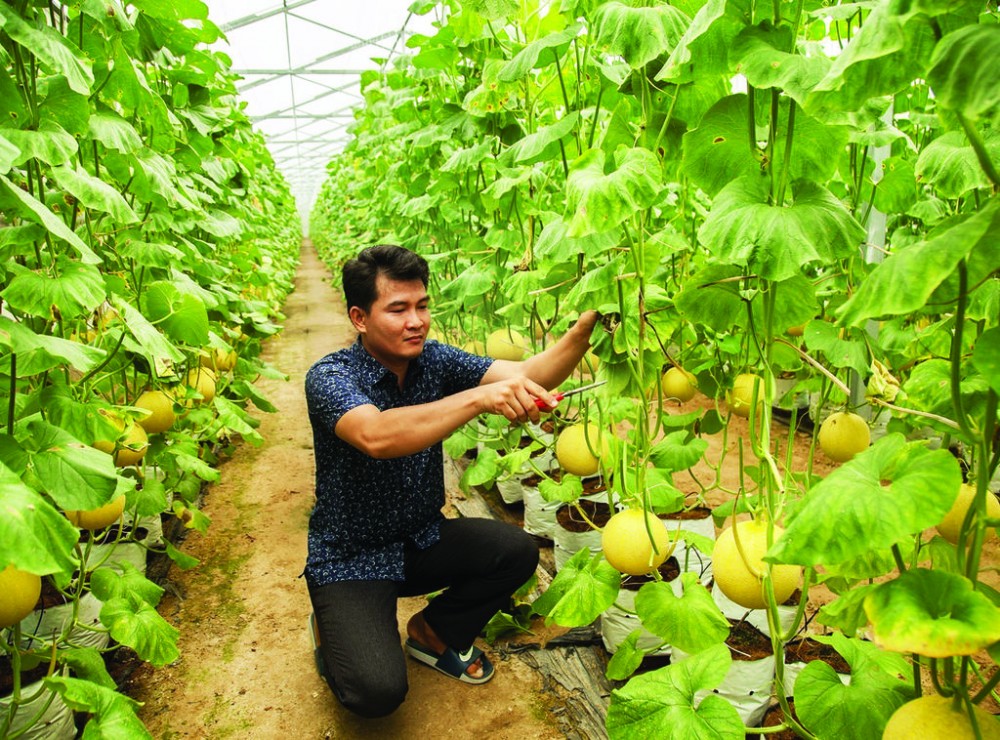
According to the United Nations Environment Programme (UNEP), the green economy "enhances human well-being and social equity, while significantly reducing environmental risks and resource scarcity".
In other words, the green economy is the set of economic activities that help preserve the natural balance. It must therefore meet both the needs of economic growth and environmental challenges.
On September 25, 2012, then Prime Minister Nguyên Tân Dung signed Decision No. 1393 approving the National Green Growth Strategy for the period 2011-2020, with vision to 2050. "Green growth is an important element of sustainable development, ensuring rapid, efficient and sustainable economic growth and making an important contribution to the implementation of the National Strategy on Climate Change", the government was told.
Three strategic tasks
The strategy identified three strategic tasks. Firstly, to reduce greenhouse gas emissions and promote the use of clean, renewable energies. Secondly, to make production greener. Third, to green lifestyles and promote sustainable consumption.
The National Green Growth Strategy has laid the legal foundations for the transition to this new model of economic development that is sustainable over the long term.
After more than ten years of implementation, the country has achieved encouraging results. Measures to reduce greenhouse gas emissions are widely applied in all sectors, contributing to a 12.9% reduction compared to "normal" development. Energy consumption has fallen by an average of 1.8% per year. The percentage of industrial companies committed to cleaner production has risen from 28% in 2010 to 46.9% in 2020. Forest cover has reached 42% by 2020.
Public and corporate awareness of green growth has increased, creating a wave of investment in green development such as wind, solar, electricity from waste, etc.
Development opportunities
To develop the green economy, Vietnam has provided incentives for investment in green agriculture and industry, renewable energies, energy conservation and the reduction of greenhouse gas emissions.
According to the World Bank, Vietnam ranks 8th among the world's top ten countries for investment in renewable energies, with a total of 7.4 billion USD. The rate of development of these energy sources puts Vietnam in4th place worldwide.
Many domestic companies have innovated and made the transition to sustainable, environmentally-friendly development. In agriculture, there is a trend towards the manufacture and export of organic products, in line with global consumer trends due to their health and environmental benefits.
At the Green Economy 2023 Forum, held recently in Hanoi, the government welcomed the European Union's (EU) important strategies and initiatives to strengthen sustainable development.(EU) aimed at strengthening business cooperation to achieve green agreements, strategies on the maritime economy and the digital economy...
Prime Minister Pham Minh Chinh stressed that Vietnam and the EU shared a new vision, a new way of thinking, a new determination and resolute actions in favor of green growth and development. According to him, the country still upholds the concept of inclusive, green and sustainable development, with the goal of achieving zero net emissions by 2050.
The head of government affirmed Vietnam's continued support for EU green development strategies, initiatives and policies, including regulations on green production, which it would seriously implement.
Facing the challenges
Investment in green development requires enormous financial resources. According to the Ministry of Planning and Investment and the World Bank, the country needs some 30 billion USD to implement its green growth strategy up to 2030. Of this sum, the State can only cover around 30%, so it must mobilize the remaining 70% elsewhere, mainly from the private sector.
The green transition requires the application of science and technology in manufacturing and commerce. However, the application of high technologies in agricultural and industrial production in Vietnam is still limited. Businesses have few opportunities to access knowledge, experience and advanced technologies. They also lack the financial resources to deploy large-scale projects.
Moreover, awareness of the green economy among the Vietnamese population and businesses remains modest. Its development still lacks synchronization and comprehensiveness, and comes up against obstacles in terms of capital, human resources and access to technoscientific advances.
Four solutions
Faced with this situation, experts have proposed a number of solutions for the development of Vietnam's green economy.
Firstly, the country needs to refine its policy framework to create the right conditions for businesses to participate in and benefit from this model. A comprehensive green economy development strategy must be drawn up in line with each stage of the country's evolution towards sustainable development, reducing the use of fossil fuels and increasing the use of renewable energies.
Secondly, the government needs to invest more resources in the development, application of high technology and energy development, particularly in manufacturing and export, in order to meet the demands of the international market. Vietnam's export products must not violate environmental and climate regulations.
Thirdly, we need to raise awareness of green development among citizens and businesses for a long-term future, thus contributing to the sustainable growth of companies and the economy in general. We also need to step up the organization of seminars and scientific forums to exchange knowledge and experience in this field.
Fourthly, we need to attract domestic and foreign resources to the transition to green growth, and strengthen exchanges and cooperation with the international community in order to benefit from its support in achieving national green development objectives. Finally, we need to learn from the experiences of advanced countries and apply them to Vietnam.
Source: lecourrier.vn/