Vietnam/ Maritime crossings to build public confidence
Every morning, even before the sun rises over the bay of Cần Giờ, in the mist and northeasterly winds, executives and civil servants from the island commune of Thạnh An, Ho Chi Minh City, begin their daily crossing to the island. More than a simple journey, this sea journey symbolizes their constant commitment to serving the population.
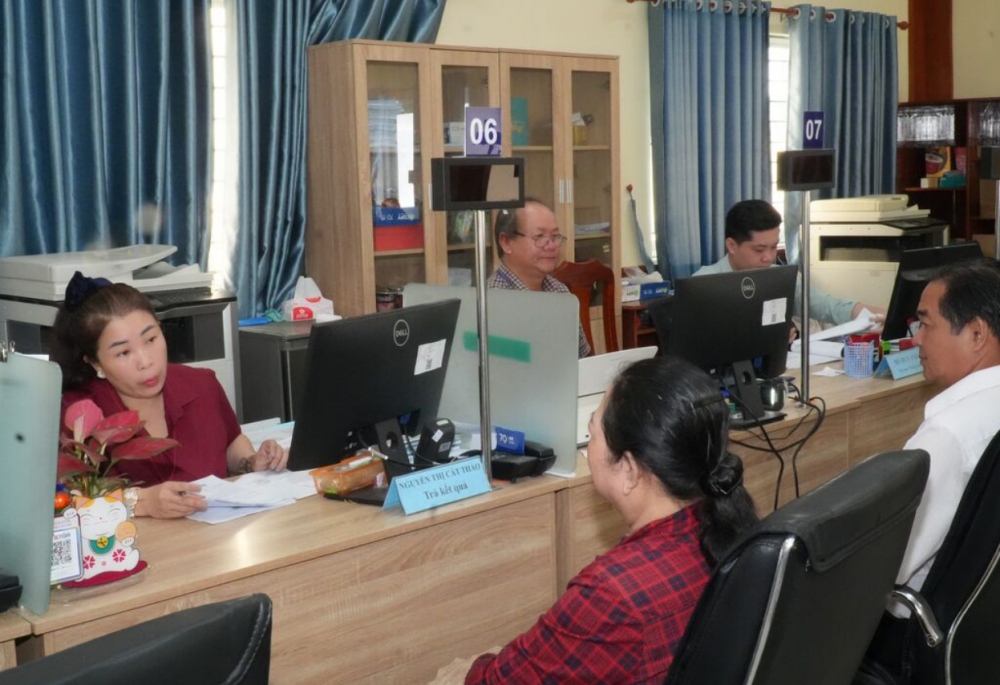
It is this spirit of responsibility, combined with a determination to constantly adapt and the gradual mastery of digital tools, that has contributed to the commune's remarkable socio-economic breakthroughs. to the remarkable socio-economic breakthroughs achieved by the commune, now resolutely focused on the goal of becoming a modern, sustainable "green island commune" by 2026.
Responsibility
Located at the southeastern maritime mouth of Ho Chi Minh City, the island commune of Thạnh An occupies a strategic position, yet remains isolated from the mainland. More than 70% of the communal political system's executives reside on the mainland, making two boat crossings each day to reach their posts.
Nguyên Tấn Hòa, a specialist in the Economic Department of the Communal People's Committee, remembers his early days: previously stationed on the mainland, he was assigned to Thạnh An during the implementation of the two-tier local government model. The main challenge lay not in professional expertise, but in travel conditions. Bad weather and seasickness sometimes made the days particularly trying. And yet, in view of the expectations and trust placed in us by the local population, adaptation became a necessity if we were to fully accomplish the mission entrusted to us.
For Truong Van Lộc, a specialist in the Culture and Social Affairs department, returning to Thạnh An was a real "link of destiny". Already assigned to the island in 1999 at the start of his career, he returned 27 years later. Every day, at precisely 6 a.m., he embarks on a 35-minute crossing. Beyond the constraints, he expresses his satisfaction at being able to contribute directly to the development of the island community.
For him, working on an island requires more than technical skills: it means being close to the population, understanding its realities and responding to its material and spiritual needs. Despite its geographical remoteness, the commune is speeding up its digital transformation to ensure fast, efficient processing of administrative procedures.
Since July1, 2025, with the administrative reorganization and application of the two-tier model, the workload has increased significantly. Thạnh An is one of the five unmerged units and has no specialist departments, while staff numbers remain limited. Against this backdrop, every manager has to strengthen his or her skills, particularly digital skills, to meet new regulatory requirements and growing case volumes. Overtime and delayed returns to the continent have become frequent.
Despite administrative infrastructures deteriorated by bad weather and salt corrosion, the commitment of our teams remains unwavering. In 2025, the satisfaction rate of citizens and organizations in the handling of administrative procedures reached 100%, testifying to the trust placed in the local administration.
This recognition is confirmed by local residents. A resident of the island since 1975, Hồ Văn Luông points out that since the implementation of the new administrative model, procedures have become more accessible and faster. The current team is perceived as competent, standardized and above all welcoming, generating a broad consensus among the population.
Economic breakthrough
Buoyed by this collective commitment, Thạnh An recorded significant socio-economic results in 2025. The total value of production rose by 17.2%, exceeding the target set. The agriculture-aquaculture sector grew by 16.5%, crafts, small-scale industry and construction by 29.1%, while trade and services increased by 11.2%.
Fisheries production, the commune's economic mainstay, reached 351.4 billion dôngs, with a record volume of 14,322 tonnes. In particular, shrimp production increased 2.7-fold on the previous year.
According to Huỳnh Thanh Nghị, vice-chairman of the Commune People's Committee, despite human resource and infrastructure constraints, the entire local political system has successfully achieved the 2025 targets. At the same time, the commune has guaranteed social welfare, maintained defense and security, and preserved a drug-free territory.
By the end of 2025, Thạnh An no longer had any poor households by municipal criteria. Social indicators reach 100% for health insurance coverage, full infant vaccination and broadband internet access. The commune maintains 19/19 criteria of the new improved rurality and meets 3 of the 4 criteria of the model rural commune.
Tourism is also enjoying significant momentum, with 13,770 visitors in 2025, an increase of 46%. The community-based tourism model of the island hamlet of Thiêng Liêng is proving to be a lever for sustainable income.
According to Nguyên Van Yên, secretary of the Party cell and head of the hamlet of Thiêng Liêng, the forthcoming commissioning of the shipping line linking Tac Suất to Thiêng Liêng should boost tourist appeal. The expansion of homestays, the development of night-time services and the mobilization of private investment are all part of this trend. Although tourism remains complementary to salt farming, it represents a structuring step towards sustainable diversification of the local economy.
By 2026, the municipality is aiming for 15.43% growth in total production value. Fishing will remain the mainstay, while tourism will become the driving force behind development. The "For a green island commune" program will be stepped up, with the aim of equipping eligible administrative buildings with solar photovoltaic systems by 2030.
The local strategy prioritizes the preservation of the mangrove ecosystem, the development of renewable energies, environmentally-friendly transport and the use of renewable energies.The local strategy prioritizes preservation of the mangrove ecosystem, development of renewable energies, environmentally-friendly transport, completion of the coastal dike and connection to the river bus network. The full digitization of administrative procedures and the development of the digital economy are other priorities.The full digitization of administrative procedures and the development of the digital economy are also priorities, as are vocational training and the adaptation of livelihoods in conjunction with structuring projects such as the Cân Gio international transshipment port and high-end eco-tourism.
To overcome infrastructure constraints, the commune proposes the development of direct river bus lines and calls for private investment in specialized tourist transport. A 12.3-billion-dong plan for digital infrastructure and the construction of a new, modern administrative headquarters are being rolled out to meet the demands of administration in the digital age.
To the rhythm of daily crossings, Thạnh An's executives continue their commitment. Between maritime challenges and professional demands, they form the bedrock of an island commune in the throes of change, determined to become a model of green and sustainable development within Ho Chi Minh City.
Source: lecourrier.vn/