
Canada/The City of Drummondville unveils its 2026 budget
The City of Drummondville unveiled its 2026 budget at its council meeting on Monday evening.
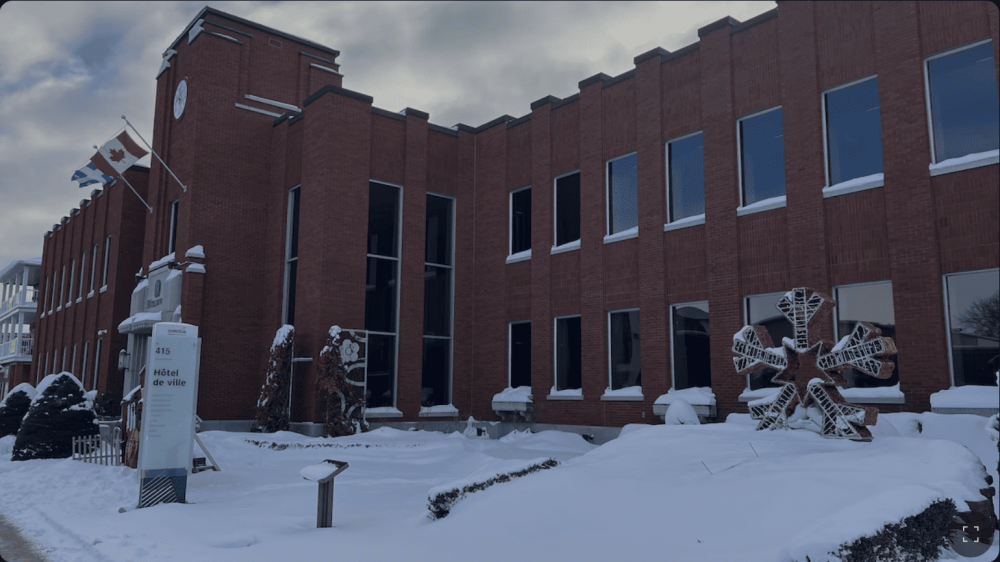
Elected officials have taken into account the issues facing the population by adopting a balanced budget of $185.9 million, an increase of 5.1% compared to 2025.
The residential property tax rate will rise to $0.588 per $100 of assessment, an increase of 1.7%.
The cost of certain services will also increase. These include $2 more for drinking water, $4 more for sewage and $6 more for waste management.
The overall increase in the tax bill will therefore total 2.86% for the owner of an average home worth around $346,000. That's about $74.
Although the increase is higher than the most recent Consumer Price Index [CPI November 2025: 2.2%], Drummondville mayor Jean-François Houle calls it reasonable.
I don't think that with the basket of services and the importance and necessity of investing in our infrastructures, I don't think that the city is fishing by excess, far from it. In any case, you'll see the municipal budgets that are slowly coming out, and we won't be much higher than the average elsewhere in Quebec.
Faced with a financial reality described as restrictive, the City of Drummondville has also chosen to put its Place Saint-Frédéric redevelopment project on ice.
Instead, it will focus on a project for a performance hall on rue Heriot, right in the heart of downtown. It will be located in a building already owned by the city.
According to Mayor Jean-François Houle, a recent external study shows that 50,000 additional people would frequent the area thanks to this new attraction. Some 150 shows could be held there in the first year of operation.
As with the modernization of the Centre Marcel-Dionne announced last year, the City of Drummondville estimates that this concert hall project could generate economic spin-offs of $700,000 per year.
We believe that this project is more likely to generate goodwill, and that's why we want to bring it to fruition as quickly as possible," says Jean-François Houle.
The preparatory analyses and plans and specifications for this initiative will be completed in 2026.
The city will also invest $4.9 million in a new refrigerated ice rink in the Saint-Nicéphore sector and $2.5 million in a multifunctional building in the Saint-Joachim sector.
And that's not counting improvements to the network of bicycle paths and pedestrian facilities, and the ongoing development of industrial eco-parks.
To find out more about the 2026 investment budget and the 2026-2027-2028 capital program, visit the city's website.
Source: ici.radio-canada.ca